

MAPPING REAL LEADERSHIP AND COLLABORATION INSIDE AND ACROSS ORGANIZATIONS
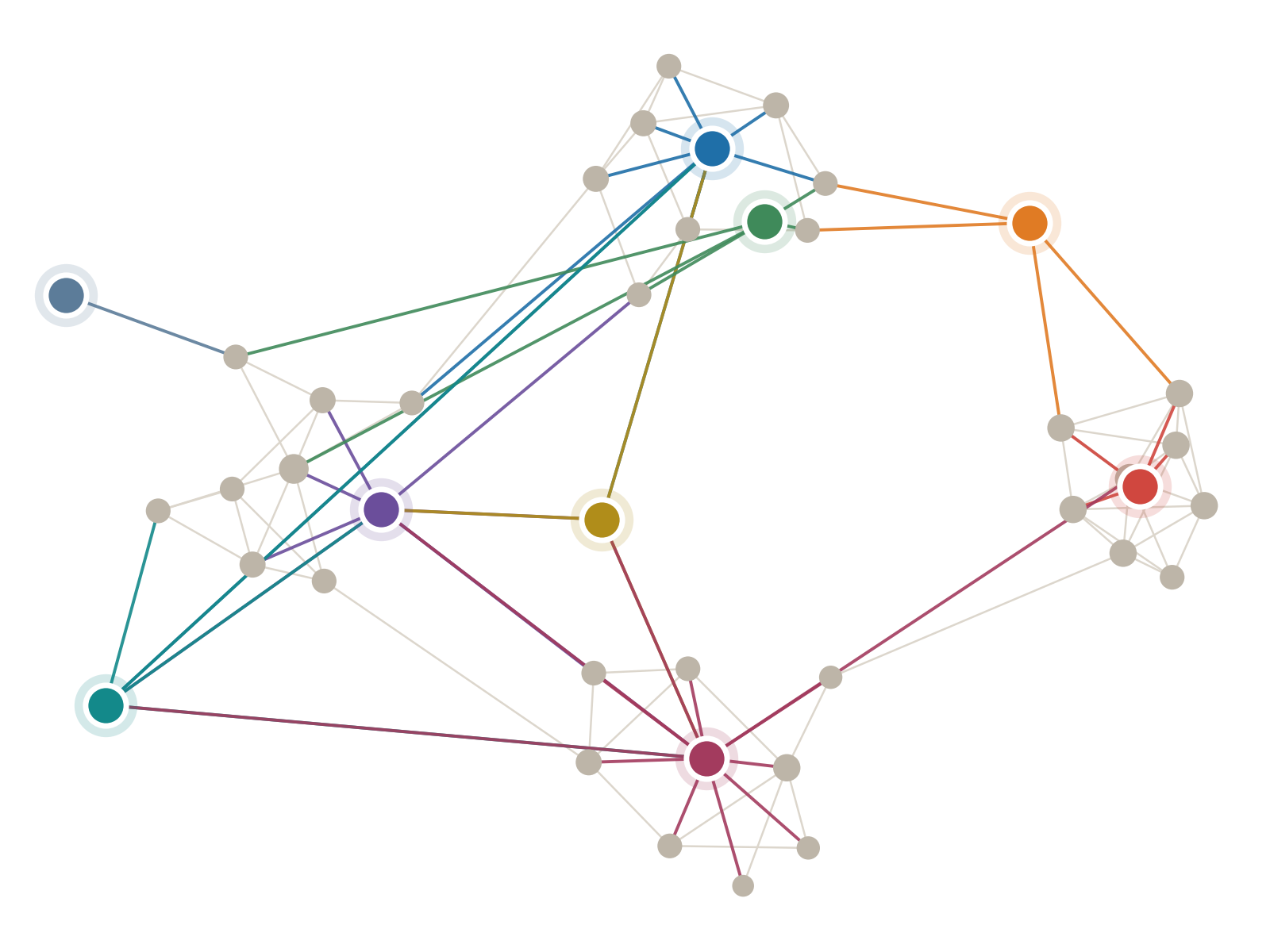
Your org chart shows who reports to whom. A network map shows who people actually rely on – for leadership, collaboration and the pathways your work depends on.
Book a 30-minute conversation about the people decision in front of you – a leadership pipeline, teams that aren't connecting, a partnership that rests on one person, or a hunch that someone important is invisible. You'll leave knowing whether a map of how work really moves would help, and what it would show you.
Before anything else, here's who you'd be working with.
A few minutes on how I see organizations, why I do this work, and what you can expect from me.
Your org chart shows who reports to whom. It doesn't show who people go to.
Somewhere in your organization is a person who rates fine. Solid, unremarkable on paper. And half the office goes to them when something gets stuck. They know how the old system works. They translate between teams that don't speak the same language. They're who new hires ask when they'd rather not bother their manager.
That person isn't on your succession slide. If they leave, you'll find out how much ran through them about three weeks later.
Ratings, nine-boxes, and manager nominations tell you what a few people see from where they sit. They can't tell you what everyone does. That isn't a judgment problem. It's a visibility problem.
What a map of your network can show you:
Where information stalls between teams that should be talking but aren't.
Who is carrying more than anyone realized, and how close they are to their limit.
The pathways of influence and where trust pools. Who is at the center of collaboration and successful change initiatives.
Who your informal leaders are – including the ones up-line managers don’t think to nominate.
People you already have are holding your organization together.
You just don’t have a reliable way to see them.
Every organization runs on a handful of informal roles. They rarely match titles, and the same person can play more than one. Here's what tends to show up on the map.
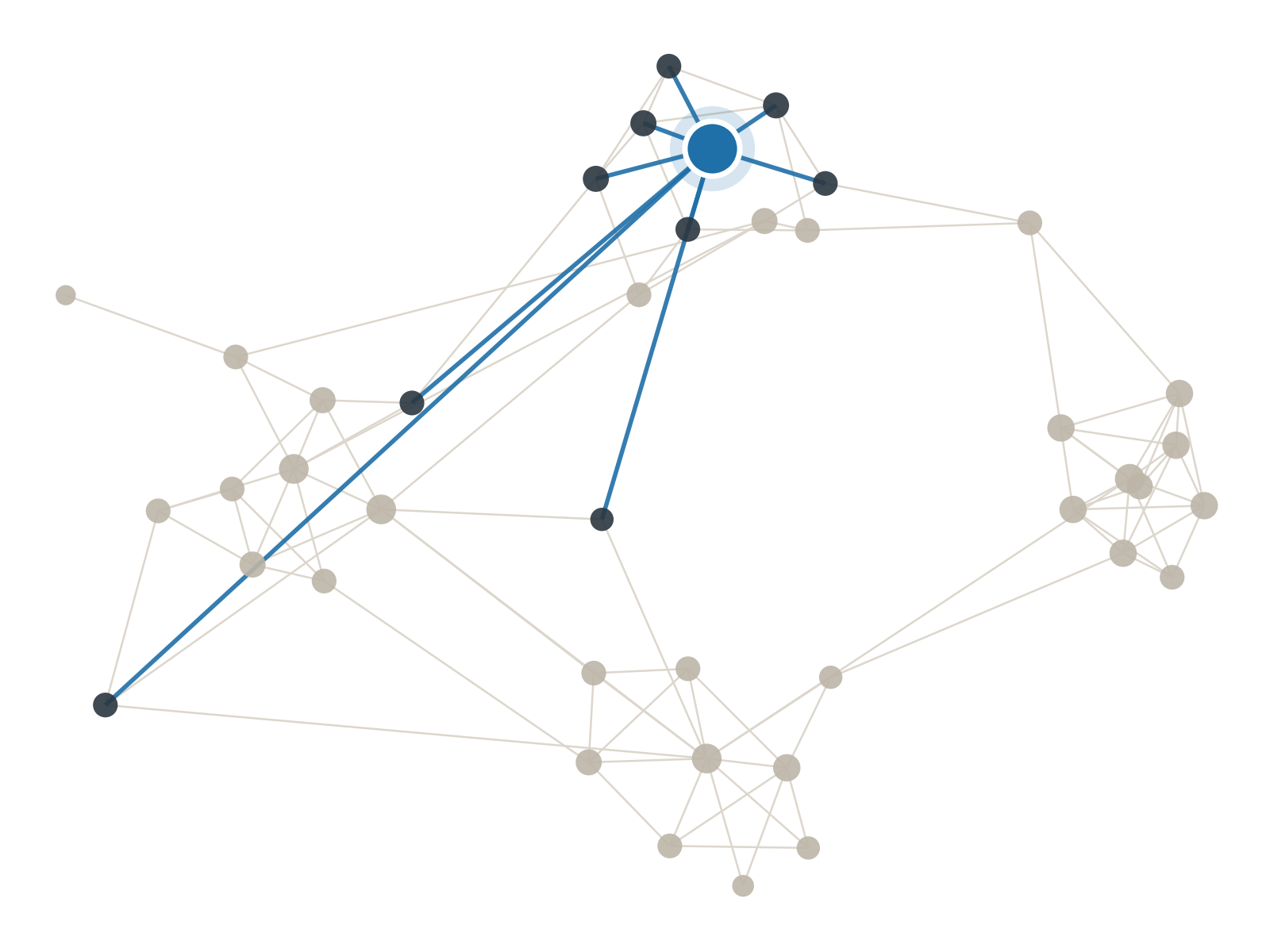
The Operator
Knows how things actually get done here and helps others keep things moving: which form, whose approval, who really has the answer. Often hidden behind a support title, and often the reason anything moves at all.
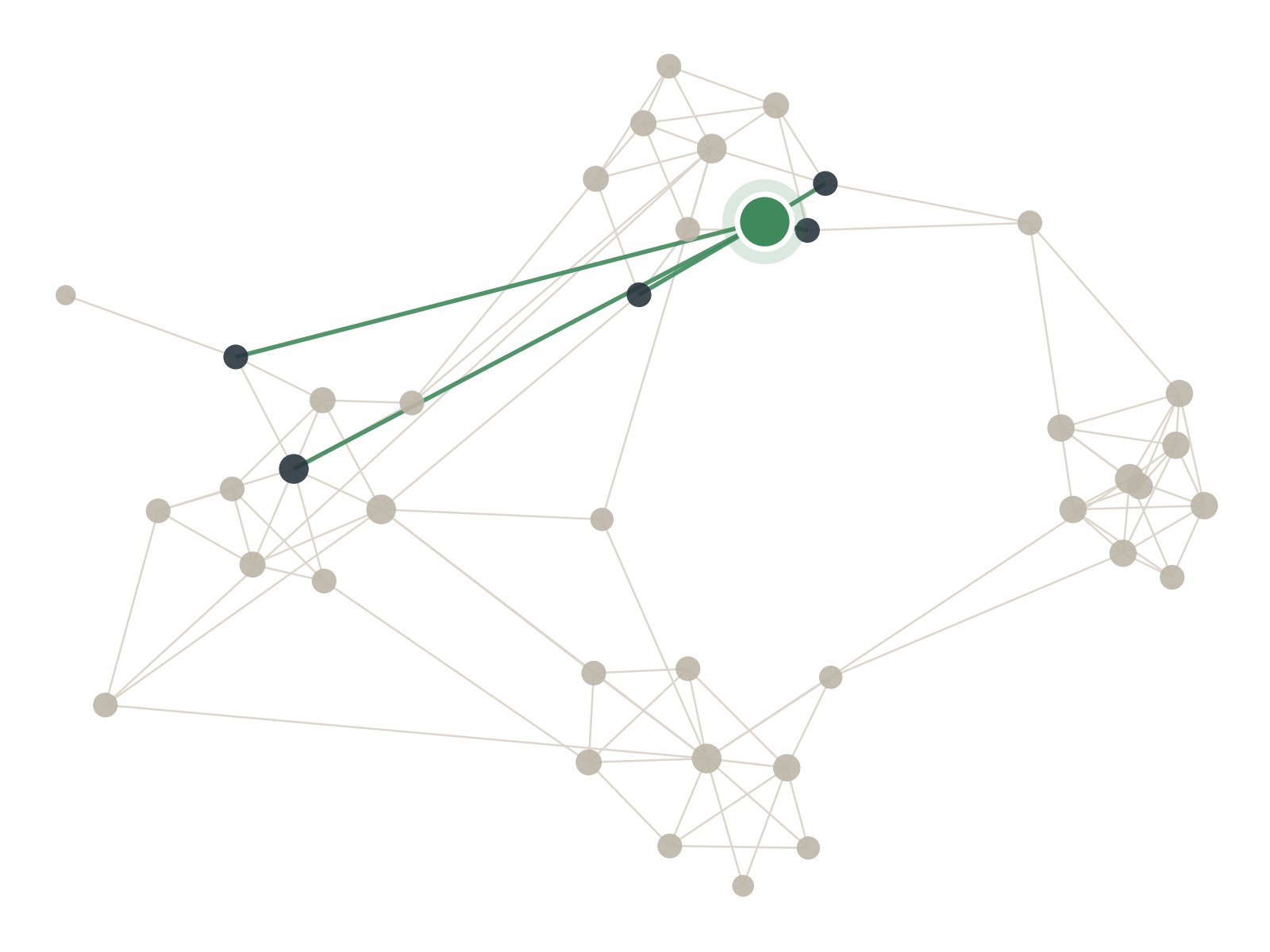
The Trusted Ear
Where people bring their difficult, half-formed, or sensitive things, knowing it stays between them. A source of candor and belonging that rarely shows up anywhere else.
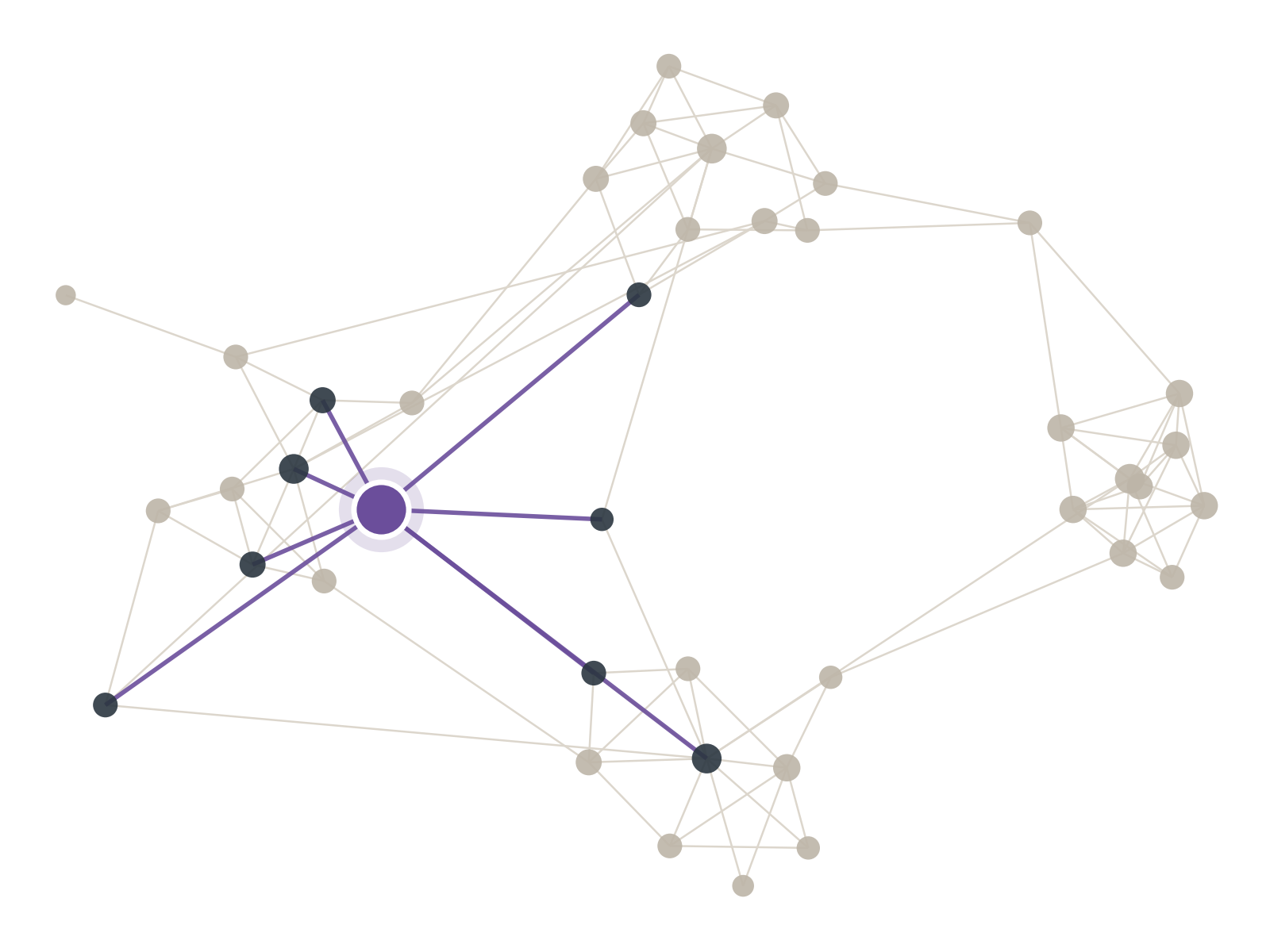
The Source
The person people seek out for deep knowledge or technical expertise. What they know would be true anywhere; what makes them valuable is that people here know to tap that well.
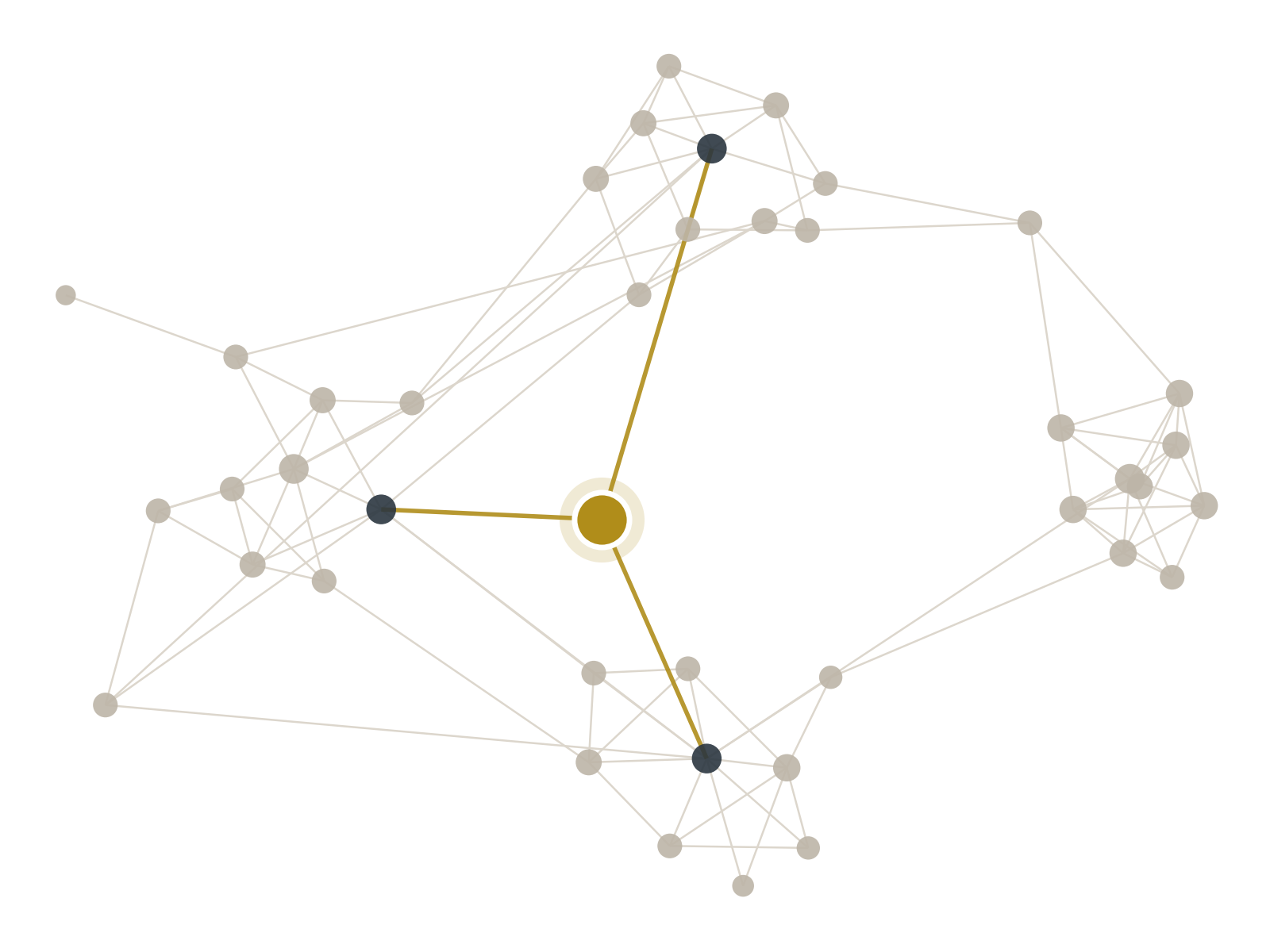
The Compass
The person that helps your people get their bearings or screw their head back on straight. People across the organization consult this person for a perspective that comes from having seen more.
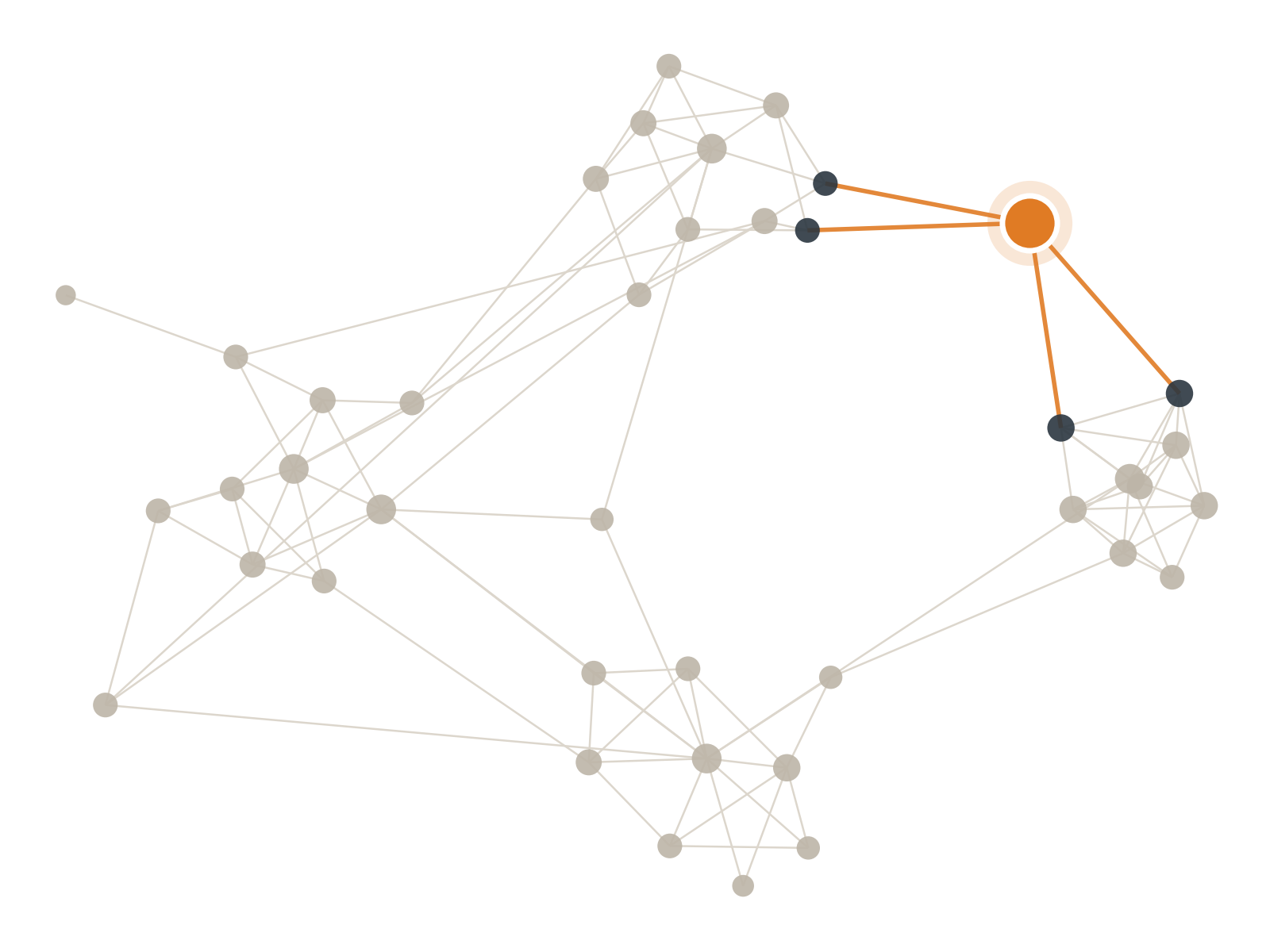
The Bridge
Connects groups that otherwise barely talk, translating priorities and language in both directions. Lose one, and two teams drift apart without anyone quite knowing why.
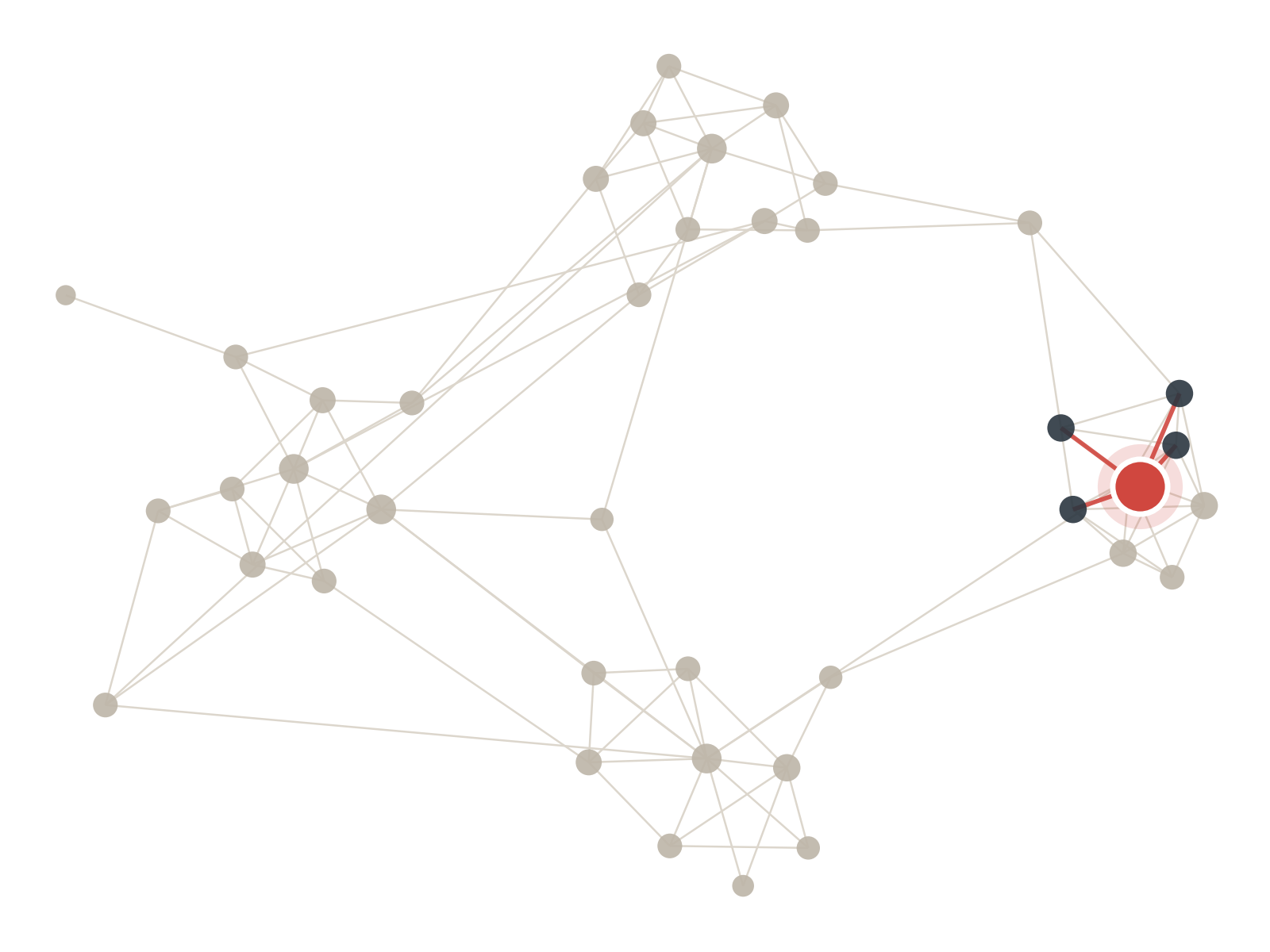
The Energizer
Not necessarily the loudest voice in the room, but the one who leaves people more ready to take action than they were before. You can see their energy in the people around them.
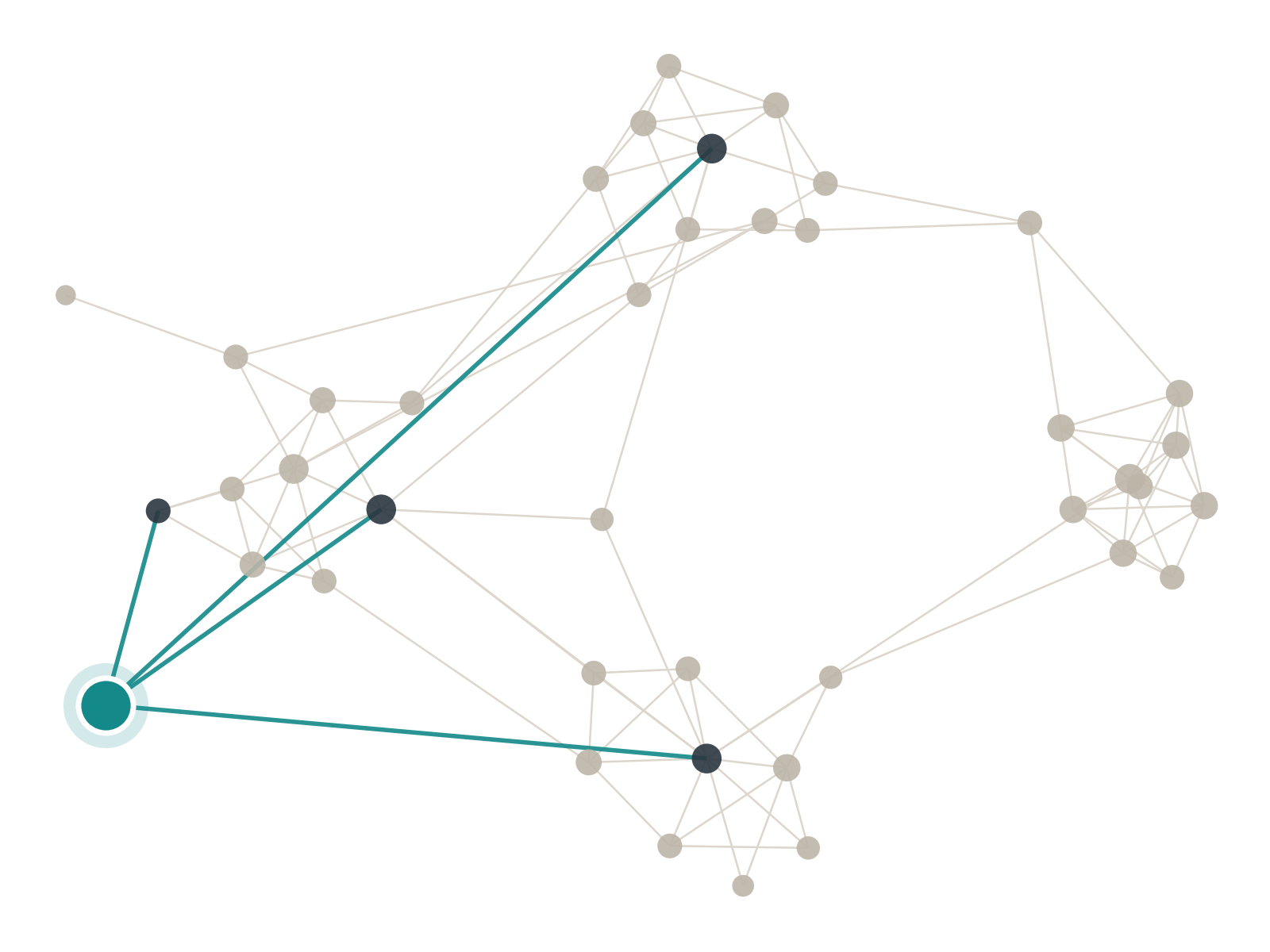
The Challenger
Gives voice to the unsaid questions and is likely the person who will raise whether this is the best course of action – not simply give a status update. Whether they’re heard as a thought leader or an agitator can depend on who they’re connected to.
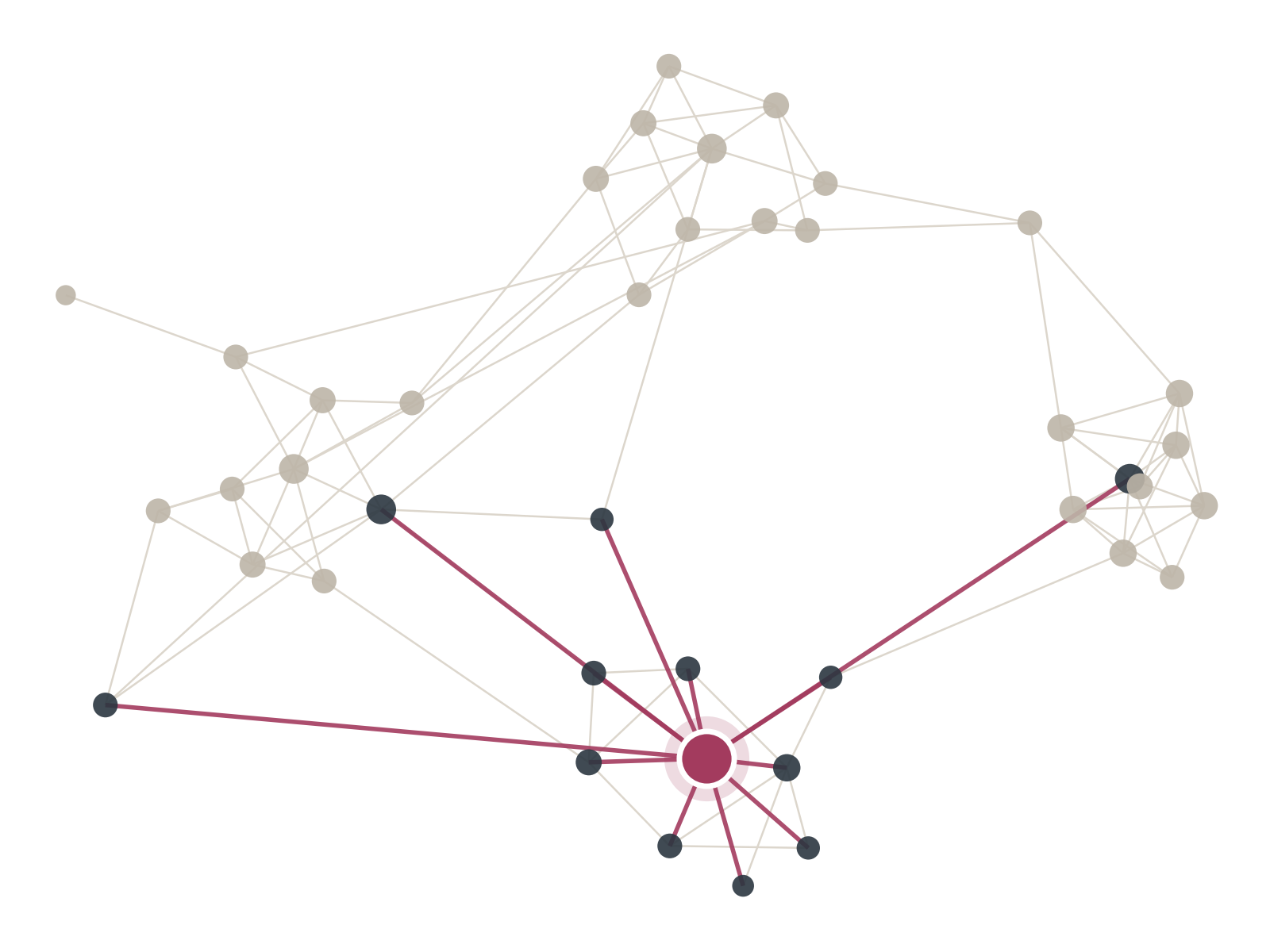
The Overloaded Hub
Everyone’s first (or only) call, for multiple kinds of need, which is exactly the problem. Your most capable and committed people become bottlenecks before they become flight risks.
Which of these people should carry your next change?
Network position predicts who can move an organization better than title does.
Read more in the case studies below.
Here's what I mean by mapping your organization.
Three minutes on how it works, what you'll see, and how your people's answers are protected.
How this works.
1
We talk.
You tell me what you're trying to decide. Together we figure out who should be in the picture and what questions are worth asking.
2
Your people answer a short, confidential survey.
A handful of questions about who they actually go to: to get work done, to understand something, for advice, for a push.
3
We read the map together.
I bring the visuals and patterns surfaced in analysis, and what I think they mean. You bring what only you know. We work out what to do next, and when to look again.
Your people's trust is the whole point.
Individual survey answers stay with me; raw data is not shared. You'll see where people sit in the network and what that means for the decision in front of you – and before anyone answers a single question, they'll know exactly what will and won't be shared, and why.
Why this works.
This isn't a personality quiz. Network analysis maps things that don’t appear on an org chart or utilization reports: how information moves, who people trust, and whose influence carries. Decades of research connect these to performance, leadership, and effective change inside organizations. Below is a sampling of the scientific underpinnings that make this work so powerful:
-
Most performance reviews measure what someone delivered, not how they got there or who they helped along the way. But leadership and collaboration are behaviors, and they mostly show up in other people’s work: the colleague who removed the block, the person whose advice changed their colleague’s approach. Ratings rarely see that. A network map is built from it.
In their research on collaboration, Cross, Rebele and Grant found that around 20% of an organization’s “stars” hit their own numbers while contributing little to their colleagues’ success. Meanwhile the people others rely on most often go unrecognized.
A network map measures the how: who people actually go to, learn from and follow.
Source: Harvard Business Review, 2016.
-
Across more than 300 organizations, Cross, Rebele, and Grant found that 3-5% of employees account for 20-35% of the collaboration that adds value. A related study of 20 organizations found the leaders who colleagues saw as the most in-demand collaborators had the lowest engagement and career satisfaction.
Source: Harvard Business Review, 2016.
-
Studying several hundred supply-chain managers at a large electronics company, research found that people whose networks spanned separate groups were more likely to voice ideas, less likely to have them dismissed, and more likely to have them judged valuable. They also earned more, were evaluated better, and were promoted more often.
Source: American Journal of Sociology, 2004.
-
Mapping seven large groups across different organizations, Cross, Baker, and Parker found that people others described as energizing were higher performers, and so were the people connected to them.
Sources: MIT Sloan Management Review, 2003; The Hidden Power of Social Networks, 2004.
-
The statistical method behind this is organizational network analysis. It asks people a few structured questions about who they go to, then assembles the answers into a network and looks at who is central, who bridges groups, and who sits at the edges.
What this looks like in practice.
LEADERSHIP MAPPING · ILLUSTRATIVE (SIMULATED) CASE STUDY
Harborlight: who is already leading?
The situation: a growing organization planning its next leadership bench, relying on ratings and manager nominations to figure out who to invite to the next leadership development cohort.
What this kind of map surfaces: the people others already rely on for decisions, information and support, including some who would never appear on a succession list; promising people sitting on the edges; and the few carrying more than anyone has noticed.
What this can make possible: a pipeline built on behavior and impact on the people around them rather than one a bench sourced from what is what’s visible on the surface and individual-performance outcomes.
Full walkthrough coming soon.
INTERNAL & EXTERNAL COLLABORATION CASE STUDY · IN PROGRESS
“Safelight” nonprofit: collaboration for mission effectiveness
The situation: a nonprofit whose work depends on internal collaboration between office staff and trainers in the field. And whose mission relies on collaboration and teaming with community partners, amidst a shifting environment.
What this kind of map surfaces: insights about collaboration internal and external to the organization.
What this can make possible: identifying areas to enhance team effectiveness and collaboration internally, as well as opportunities for external opportunities for teaming partnerships, coalitions, or potential markets.
Full case study coming soon.
CASE STUDY FROM THE RESEARCH
The change agents of the NHS
The situation: 68 change initiatives in the UK's National Health Service, an organization notorious for being hard to change.
What the research found: the people who succeeded weren't the most senior; they were the most central in the informal network. People who bridged disconnected groups were better at major change; people in tight-knit networks were better at smaller changes; close ties to fence-sitters always helped.
How we can leverage it: choose who carries your next change by where they sit in the network, not by title.
Battilana & Casciaro, Harvard Business Review, 2013; Academy of Management Journal, 2012.
NEXT UP
Your organization
Questions you might have.
-
Leaders of small and mid-sized organizations, typically up to about 1,000 people: COOs, CEOs, executive directors and heads of People.
It's also for nonprofits, community groups and coalitions whose work depends on how well people connect.
If you're about to make a decision that depends on relationships and human connection, this is for you.
-
One short survey per person. Most of the work and time spent happens on my side.
-
It depends on how many people are in the picture and what you're trying to decide. We'll scope it together on the call, and you'll get a single, clear project fee in writing before anything starts.
-
Those tell you what people think and how they're rated.
Network analysis tells you how work actually moves, surfacing the people and behavior not captured in those instruments. It works best alongside what you already have, not instead of it.
-
We read it together, decide what to act on, and plan when to look again. Networks follow behavior, and subsequent maps can show if there has been change over time.
Working on your own network, not a whole organization's?
The Personal Network Lab maps your own network around you: who you go to, who comes to you, and where your relationships are strong, stretched or missing for what you are trying to achieve. Available via one-on-one coaching and as a group workshop.
Sign up for your Personal Network Lab or contact me about a workshop for your group or event.
Let’s talk about what you’re trying to decide.
What the call covers
Thirty minutes conversation, not a presentation. You tell me about the decision in front of you and what's making it hard. I'll ask about who's in scope and what you'd need to see to decide with confidence. If a map isn't the right tool – if a survey, a set of conversations, or nothing at all would serve you better – I'll tell you.
What happens after
Yes, we'll talk about working together. If it's a fit, I'll send a short proposal within a few days: scope, timing, data confidentiality, and the project fee, so you know exactly what you'd be agreeing to.
If working together isn't a fit for your situation, you'll still leave with a sharper question than the one you brought.